
The Guardian of the Wind: A Mapuche Ski Patrol Legend in Chapelco
Discover the epic life story of a Mapuche pioneer who served 47 years on the Chapelco Ski Patrol. From the Patagonian steppe to the Austrian Alps, a story of rescue and heritage.
CHAPELCOEN
Bariloche Top – Patagonian Legends Series
4 min read
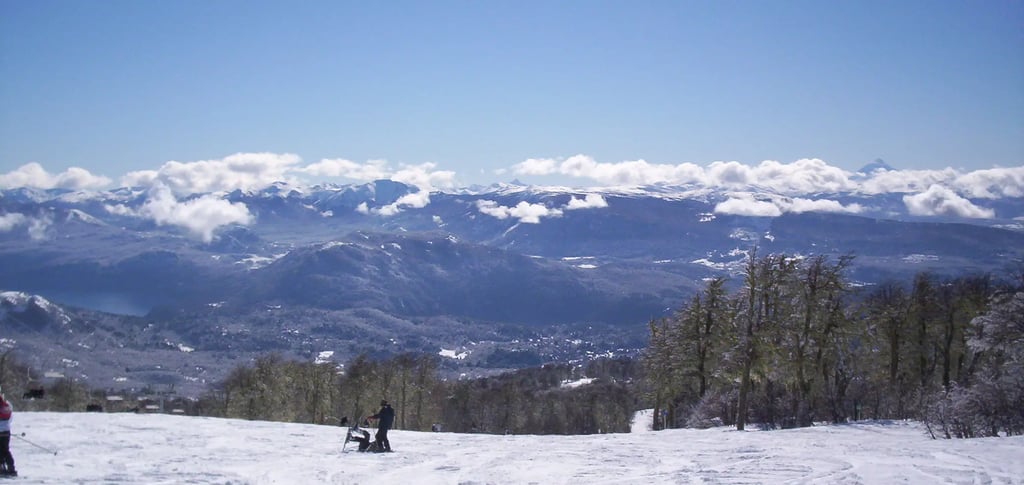
This is the story of a man who carries the mountain range in his blood and commitment in his gaze. It is more than just a worker's account; it is the chronicle of how a boy, left alone with six sheep on the Patagonian steppe, ended up teaching Europeans how to rescue a life at the end of the world.
A Legacy Born from Loss
The elders say that to truly know Cerro Chapelco, you shouldn't look at the machines but listen to the stories of those who arrived when the resort was barely a topographical sketch on virgin snow. Among them stands a figure who seems carved from the very rock of Lake Lácar: a man who descended from the Namuncurá Mapuche community, 100 kilometers from San Martín de los Andes, with a heart tempered by loss and necessity.
His story, told by locals around campfires, begins with a void. He was only seven years old when his father passed away, leaving him and his four younger siblings with a heritage that many would see as a burden, but for them was a school of life: six sheep and fifty goats. In those years, wool was worth more than gold, and those animals were the only bridge between hunger and survival. By age eleven, while other children were just discovering the world, he was already saying goodbye to his mother to work at the Chacayal and Cerro Los Pinos ranches. He left as a boy so he could be the man who put bread on the table for his siblings.
The First Stakes in the Snow
He arrived in San Martín de los Andes in 1977, an era when milk was delivered house-to-house by horse-drawn sulky. He worked at a local dairy until the mountain—his final destiny—called to him.
When he first set foot on Chapelco that same year, the gondola was merely a drawing on French paper. On September 30th, he was tasked with climbing to the 1600-meter level with a foreign surveyor. Spring meant nothing at that altitude; they had to shovel through five feet of snow just to find the earth and drive the survey stakes. He was there for the first clearing, the very first mark of the resort visitors enjoy today. While the youth of 2026 see the cables and gondolas as a given, he remembers the sweat of clearing the forest by hand.
From Liftie to Legend
His ascent on the mountain was as natural as the spring thaw. He started as a "liftie," helping skiers onto the old double chairs. But curiosity took hold. On his days off, he borrowed skis. He had never skied before, but by the first day, he was coming down the Triple chair. By the second, he was at the summit. One afternoon, as he skied under the lift line, the managers saw him gliding with the fluid grace possessed only by the sons of the land. "That boy belongs on the Ski Patrol," they said.
He entered the office trembling, fearing he was being fired. Instead, he walked out with a new uniform: that of a Mountain Patrol First Responder (Pistero Socorrista). It was the beginning of a 47-year career. He specialized in mountain traumatology and high-altitude medicine, but his greatest skill was maintaining calm when tragedy struck the mountain. He became a paramedic of the cold, seeing young lives extinguished and others saved in the white vastness.
The Miracle at the Creek
One of the most enduring legends about him occurred near the ridge by the T-Bar sector. Three teenagers appeared, exhausted, reporting that a friend had been left behind. It was 7:00 PM and the sun was setting. The search party went out, but the trail was lost in a creek. Midnight passed in total darkness. Using flashlights that barely pierced the blackness, a teammate spotted a track in the water. The lost boy, clever enough to survive, had taken off his skis and walked through the streambed to avoid sinking into the deep snow.
They found him at 1:00 AM, tucked into a small crevice under a rock with water flowing over him. He was asleep, shielded from the wind, using the zero-degree water as insulation against the ten-below-zero air outside. That rescue remains his proudest moment—a testament to the intuition that only half a century on the slopes can provide.
From the Andes to the Alps
His mountain wisdom eventually took him to Bariloche and then to Europe. For six months, he worked as a patrolman in the Alps, where French and Austrian chiefs were left in awe. "You in Argentina are not that far behind," they told him. But he knew that in the South, work was done with a different heart. He brought back modern techniques but always maintained the essence of the paisano who can read the weather in the clouds.
Today, after nearly fifty years of service, illness has forced his retirement. But Chapelco remains his home. He married a woman from the Corincura community, and his two sons have followed his tracks, serving today as patrolmen on the same mountain.
They say that if you climb to the summit today and listen closely, you can still feel the spirit of the boy who delivered milk by sulky and ended up saving lives in the snow. The man has retired, but the soul of the patrolman stays forever on the slopes of Chapelco.