
El Colorado: A Mountain That Asks No Questions | Ski Chile.
An honest, expert review of skiing El Colorado. Why this Chilean resort is the best place to master your technique, read the snow, and enjoy a real mountain experience. Ski Chile.
EL COLORADOEN
altapatagonia.ski Staff
1/5/20264 min read
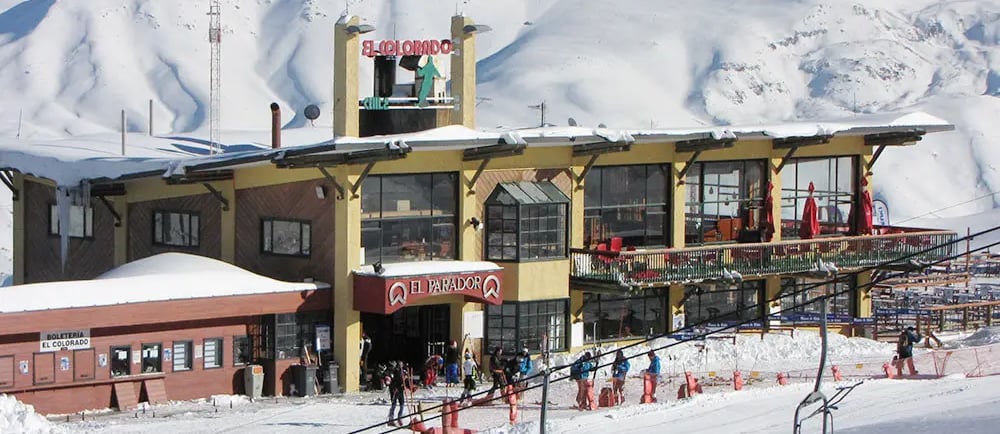
After more than twenty years on skis, you learn to quickly distinguish which mountains are worth your time. I’m not talking about vertical drop, the number of runs, or the epic promises found in a brochure. I’m talking about something simpler and far harder to find: coherence. A mountain that behaves like a mountain, that doesn't demand you prove anything, and doesn't push you beyond your limits without warning.
El Colorado is one of those mountains.
The Morning Dialogue
The day starts early—always. Not out of romanticism, but because the Andes do not negotiate schedules. Leaving Santiago while it’s still dark feels like a silent ceremony: the city lights fading behind you, the switchbacks following one after another, and the air turning thinner and drier as you gain elevation. The mountain range appears without warning—massive, direct. It doesn't matter how many times you’ve seen it; it always commands a mental pause.
El Colorado doesn't present itself as a spectacular mega-resort. It doesn't need to. Upon arrival, everything feels like it’s exactly where it should be. There are no gimmicks, no giant screens promising impossible thrills. This is a place built for skiing, and you feel that from the first moment. Here, the mountain doesn't compete with the experience: it is the experience.
Honesty in the Terrain
I’ve always believed that easy runs reveal more about a resort than the difficult ones. In that sense, El Colorado is honest to the core. Its green runs are truly green. They don’t deceive, they don’t punish, and they don’t push anyone beyond their level. Here, you either learn well or you don’t learn at all. The terrain forces you to work on posture, balance, and speed control without surprises.
The progression is natural. Intermediate runs appear exactly when the body is ready for them. There are no absurd jumps in difficulty or treacherous pitches. The design guides you. The mountain teaches without raising its voice.
Technical Intuition: Gear and Body
The first run of the day is always an intimate dialogue with the body. The legs wake up slowly, the boots feel just right, and the skis respond based on how they were chosen and tuned. At El Colorado, an all-mountain ski works exceptionally well: mid-radius, good stability, and tolerance for "worked" snow. It’s not a mountain that demands extreme gear, but it does demand well-adjusted equipment. Loose boots or skis that don't match your weight and level can ruin the experience in this high-altitude environment.
As the morning progresses, the resort fills with life. Families, groups of friends, solo skiers, and snowboarders—all finding their rhythm. El Colorado has a clear circulation; everyone finds their space without interfering with others. This isn't an accident; it’s the result of a layout that understands how people move on a mountain.
The Art of the Pause
There is something I deeply value here: skiing isn't mandatory to feel part of the place. You can go up, walk, sit, and just watch. The mountain doesn't reject those who aren't flying down the slopes. This says a lot about its character. Skiing is the axis, but it isn't the only language spoken.
By mid-morning, the body asks for a break. Eating at altitude is never just about the food. The appetite is more direct, less sophisticated. Something hot, something hearty, and a view that puts everything into perspective. From experience, I know this pause isn't a whim. At high altitude, the wear and tear is greater, even if you don't feel it immediately. Hydrating well and eating on time improves performance and reduces errors. The mountain rewards those who take care of themselves.
Reading the Snow
As the sun rises, the snow changes. It always changes. High-traffic runs become compact; hardpack sections appear, others soften. This is where skiing stops being mechanical and becomes conscious. More knee flexion, finer edge work, and anticipation in the turn.
For intermediate and advanced skiers, this is an ideal mountain to polish technique. You don't need extreme steeps to improve; you need coherent terrain. This is "craft" skiing, not "spectacle" skiing.
Pro Tip: Pay attention to your gear. The length of your skis should match your height and level; the angle of your poles affects your balance; and your boots, always properly buckled, are the foundation of every clean turn.
Closing the Day: Ego vs. Gravity
As the afternoon wanes, fatigue sets in. This is when many make the same mistake: wanting one "heroic" last run. Over the years, I’ve learned that knowing when to call it a day is a fundamental part of skiing. Choose a familiar run, descend with control, without hurry, without needing to prove anything. The mountain always wins battles of ego.
The light shifts, shadows lengthen, and the temperature drops fast. The snow hardens, demanding precision. This is the most honest skiing of the day—the kind you can’t fake.
When you finally pack your skis and look back up, a feeling emerges that is hard to explain. It isn't euphoria. It’s something quieter. A mix of exhaustion, gratitude, and silence. El Colorado doesn't promise the best day of your life. It promises a real day. And it delivers.
I don’t look for mountains that dazzle me anymore. I look for mountains that respect me. El Colorado does that. It doesn't demand more than you can give, but it doesn't let you forget what you know. That’s why I return—not out of nostalgia, but for the coherence.