The Ultimate Guide to Farellones: History, Adventure, and Survival in the Andes
Farellones is more than just a snow-themed amusement park; it is the beating heart of Chile’s mountain culture. Located just 22 miles from Santiago, this enclave offers a unique experience that blends winter sports adrenaline with the warmth of a mountain village steeped in decades of history. In this guide, we explore everything from its origins to practical survival tips for the current season.
altapatagonia.ski team
4 min ler
1. Chronicles of a Stone Village: The History of Farellones
To understand Farellones, you must look at its foundations. Unlike Valle Nevado, which was born as a modern corporate project in the '80s, Farellones emerged from the passion of Chile’s ski pioneers.
In the late 1930s, a group of enthusiasts began exploring these summits. Back then, the paved road we know today didn't exist; pioneers had to climb on horseback or on foot from the lower sectors of Lo Barnechea. In 1937, the village was officially founded, characterized by its iconic stone and wood houses that still stand today, giving it that "Alpine village" feel that sets it apart from large hotel complexes.
For decades, Farellones was the only ski center in the central zone, serving as the base from which La Parva and El Colorado later developed. Today, the village is a mountain sanctuary where local residents, elite athletes, and thousands of tourists seeking their first contact with snow coexist.
2. Road Safety: The 40-Curve Challenge
The ascent to Farellones via Route G-21 is one of Chile's most picturesque yet demanding roads. To reach the park, you must navigate approximately 40 hairpin turns on a vertical climb that takes you from 2,000 to over 8,200 feet.
The Golden Rule: Chains and Traction: Even if the asphalt looks dry at the start, Chilean law and the Carabineros (police) require you to carry snow chains throughout the season.
Installation: If you don't know how to fit them, you'll find "helpers" at curves 15 or 30. They charge between $5 and $10 USD for installation. Don't wait until you're stuck on ice; if you see snow on the road, pull over and chain up immediately.
Braking: On the descent, never ride your brakes. Downshift and use engine braking to control your speed. Overheating brakes is the number one cause of accidents on this route.
Traffic Flow Restrictions: On weekends and holidays, the road operates one-way:
Uphill: Only allowed between 08:00 and 13:00.
Downhill: Only allowed between 16:00 and 20:00. If you try to descend at noon, you will be fined and forced to turn back, wasting hours of your trip.
3. Parents' Guide: Kids' Ski and Snowboard Lessons
Farellones is arguably the best place in the world for a child’s "Snow Baptism." Unlike other centers with steep pitches, the learning sector here is wide and forgiving.
Registration and Rental: At the rental shop, provide your child's weight, height, and boot size. It's vital that boots are snug but not painful.
Safety Gear: Helmets are non-negotiable for minors. Ensure ski bindings are properly adjusted to release in case of a fall.
The Group Lesson (Combo): The park offers a package for $35 USD that includes the lesson and equipment. Instructors use the "pizza" method (forming a V with the skis) to teach stopping.
Magic Carpet: Instead of intimidating chairlifts, kids use a ground-level conveyor belt that gently carries them to the top of the practice slope.
Duration: A typical lesson lasts 2 hours. Don't push a tired child; at this altitude, fatigue sets in fast. The goal is for them to associate snow with fun, not exhaustion.
4. Gastronomy: Where to Eat in Farellones
You can bring your own snacks, but if you want a hot meal, here are the main options:
Food Trucks (Upper and Lower Sectors):
Profile: Fast food on the go.
Menu: Burgers, fries, hot dogs (completos), and coffee.
Prices: Between $8 and $15 USD per person.
El Montañés:
Profile: A village classic with a rustic atmosphere, fireplaces, and woodwork.
Menu: Stone-baked pizzas, grilled meats, and sharing platters.
Prices: Between $25 and $40 USD per person.
Pro Tip: Best atmosphere and views of the valley.
La Parva / Taringuita:
Profile: Sophisticated gourmet dining.
Menu: Handmade pastas, hot soups, and mountain cocktails.
Prices: Exceed $35 USD per person.
Note: If leaving the park to eat here, keep your wristband and receipt to re-enter.
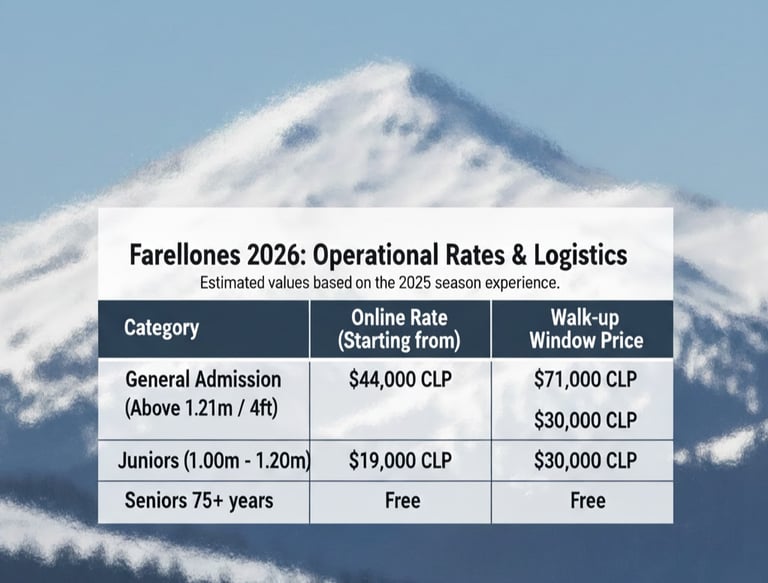
5. Rates and Logistics (Current Season)
The implementation of Dynamic Pricing has changed the game. There is no longer a flat rate for the entire winter.
Featured Activities
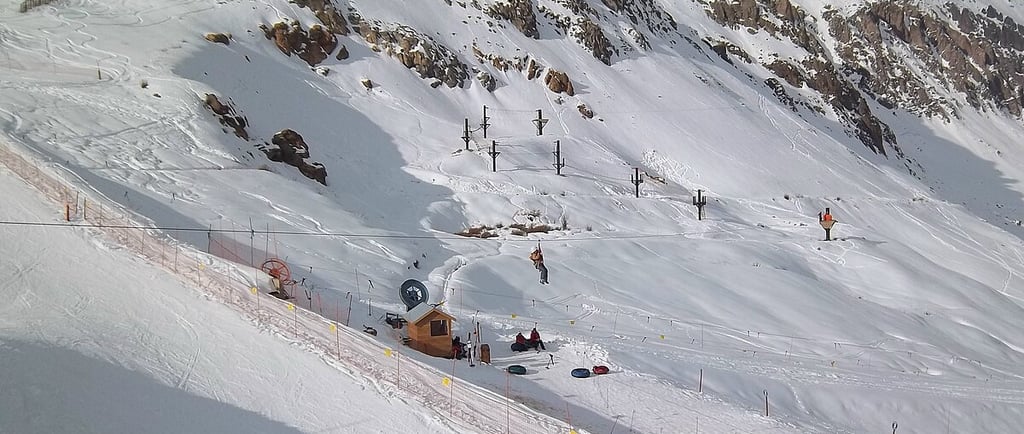
Tubing: This is the most popular attraction. You’ll slide down 250-meter lanes on an inflatable tube. Pro Tip: Hit the tubing runs early to avoid wait times that can exceed 40 minutes.
Zipline (Canopy): There are two lines available. The longest one spans a large portion of the park, offering the sensation of flying over the Andes.
Snowmobiles: These are guided tours and come at an additional cost. They are ideal for those who want to explore deeper mountain landscapes without putting on skis.
6. Connectivity and Payments: The Reality of High Altitude
One detail travel videos often skip is the poor connectivity. Being surrounded by massive peaks means cell signal is intermittent at best.
Payments: While shops use card terminals, they frequently lose signal. Carrying cash (Chilean Pesos) is often the difference between getting a meal or going hungry if the system goes down.
Wi-Fi: There are no high-quality open public networks in the park. Keep this in mind if you need to stay connected for work.
7. Pack Like a Pro: Survival Checklist
To ensure the weather doesn't ruin your day in Farellones, make sure your backpack includes:
Sunscreen: Snow reflects 80% of UV radiation. You can get a severe burn even on overcast days.
Sunglasses or Goggles: "Snow blindness" is a real risk due to the light intensity at this altitude.
The Layering System:
Base Layer: Moisture-wicking thermal (to keep sweat away).
Mid Layer: Fleece or wool (to trap heat).
Shell: Waterproof/Windproof jacket (to protect against humidity and gusts).
Hydration: Mountain air is extremely dry and dehydrates you quickly. Drink water constantly, even if you don't feel thirsty.
Final Verdict: Is Farellones Worth It?
If you are an expert skier looking for technical vertical drops, Farellones will feel too small—you should head straight up to Valle Nevado. However, if your goal is to have fun, experience snow for the first time, play with your kids, or fly across ziplines, there is no place in South America that offers the recreational infrastructure of Farellones.
The key to success lies in planning: buy your tickets online at least 48 hours in advance, leave Santiago before 7:00 AM, and always carry some cash. Follow these steps, and your mountain experience will be unforgettable.