
The Legend of the Chapelco Sentinel: The Mountain's Legacy
Discover the epic story of the first pioneers of Cerro Chapelco. From the 1968 "Sentinel" machinist to the technical mastery that reached the Austrian Alps. A must-read for mountain lovers.
CHAPELCOEN
Bariloche Top – Historical Edition
4 min read
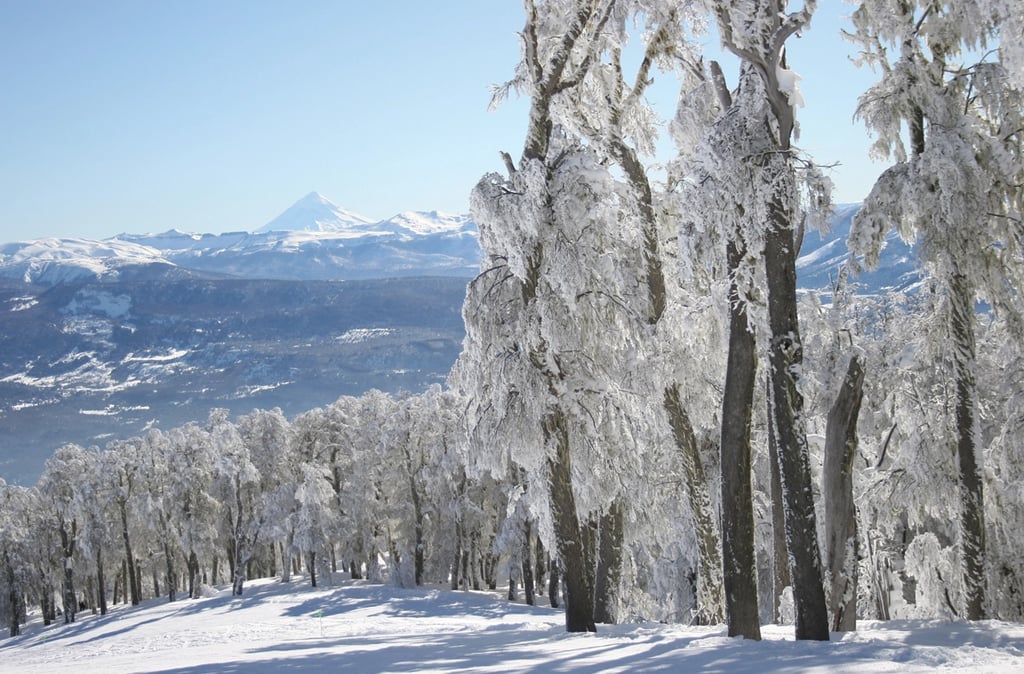
Legend has it that during the harsh winters of the late 1960s, when Cerro Chapelco was nothing more than a sleeping giant under ice and silence, the mountain demanded men of a different breed. Those were times when technology wasn't measured in satellites or real-time weather apps, but in the raw power of National Roadway diesel engines and the unwavering temper of those who dared to live where the rest of humanity only wanted to flee. Among the snowdrifts and the frost-laden Lenga trees of that era, a story of pioneers was forged—one that the old inhabitants of San Martín de los Andes still recount with sacred respect, an echo of human effort that resonates even within the modern infrastructure projected for the 2026 season.
In the winter of 1968, the snow fell with an ancestral fury that seemed intent on erasing the entire map of the Neuquén province. The Puente Blanco route was barely an invisible scar under three meters of white powder, and access to the mountain base was a dream broken by weather that forgave no mistakes. It was then that a nearly mythical figure emerged: the Machinist, an iron sentinel who accepted the challenge of living on the summit throughout the entire winter season to prevent the mountain from dying in isolation. He didn't live in stone lodges or modern apartments with central heating, but in a small mobile hut—a precarious shell of wood and metal parked stoically behind what is known today as the Villa Maguida Refuge. There, amidst the roar of the white wind and the constant creaking of ice against the walls, an entire family made the mountain their only home, living alongside a motor grader that was, all at once, their tool, their source of heat, and their only life insurance.
It is said that the daily work began long before the first ray of light touched the sharp silhouette of the Lanín Volcano. At six in the morning, when the cold cuts your breath and metal tools stick to the skin like fire, the machine's engine woke with a thunderous roar that shattered the sepulchral silence of the forest. The machinist's objective was clear, technical, and ruthless: it wasn't enough to simply push the snow to the side; he had to "voltear el cordón" (flip the ridge). With surgical precision, the heavy blade of the grader had to hurl the accumulated snow into the abyss. This technique was vital, as it prevented the side walls formed after each pass from choking the route and turning it into an impassable trap during the next storm. It was a dangerous dance over the precipice; in an era without guardrails, only reeds placed by hand by the machinist’s children marked the limit between the road and freefall.
The legend tells that the mountain was not just cleared of snow but "plowed" with a deep understanding of natural engineering. When the gravel appeared beneath the frost, the machinist lowered the scarifier to break up the surface and level it. He knew perfectly well that filling a pothole with soft material without treating its hard base was a lost battle against the traffic of the few vehicles attempting to climb. It was a science of mud and stone, where every culvert was monitored with obsession so that the spring thaw wouldn't wash away months of effort in a single destructive washout. In that wild environment, the children of the mountain grew up seeing metal tracks and road plans before bicycles, learning by osmosis that survival on the mountain depends on understanding the weight of winter and the mechanical rhythm of the machines.
These were the years of the foundational refuges, the mystique of Doña Carla’s little house and Judge Quiroga’s kiosk, long before modern international loans transformed the region's destiny. It is told that in '69, skiing was an act of pure faith, almost a shared madness. Without carbon gear or heat-molded boots, the brave strapped rustic wooden planks to their feet and threw themselves down slopes where high-tech lifts stand today. It was the necessary prologue to an era where the Mountain Patrol wasn't a certified profession, but a trade for "fit and capable" men. They were net-haulers, fuse-repairers in blizzards, and instinctive rescuers—men like Raco Salgado who learned the secrets of the mountain not from manuals, but by listening to the creaking of the snow and the wind.
Over the decades, that empirical knowledge transformed into a mastery that transcended Patagonian borders. The legend narrates how Chapelco’s spirit and technique reached the Austrian Alps, proving in the resorts of Sölden and the slopes of Tyrol that the school born at the end of the world was as rigorous and technical as any elite European academy. The instructors trained in these lands needed no additional exams abroad; their experience in the hard and changing snow of Neuquén was their best credential. The German dialect was no barrier for those who spoke the universal language of the perfect turn and absolute respect for the pitch.
Today, as the gondola ascends silently toward the promising 2026 season, the memory of that first machinist and his family still vibrates in the frigid air of San Martín de los Andes. It is the story of an epic transformation: we went from leather boots tied with straps to Burton’s Step On system, and from a solitary motor grader fighting the Andes to world-class satellite logistics. However, deep in the heart of Chapelco, the lesson remains the same as it was in 1968. It is a lesson in humility and professionalism. Because, as those who know the true history of this mountain say, the student is never to blame for not learning if the teacher does not know how to teach—and in the vastness of the mountain, the mountain is always the final teacher. Man, regardless of the technology available in 2026, remains that apprentice attempting, with respect and courage, to decipher the whisper of the snow beneath his feet to turn a descent into a personal legend.